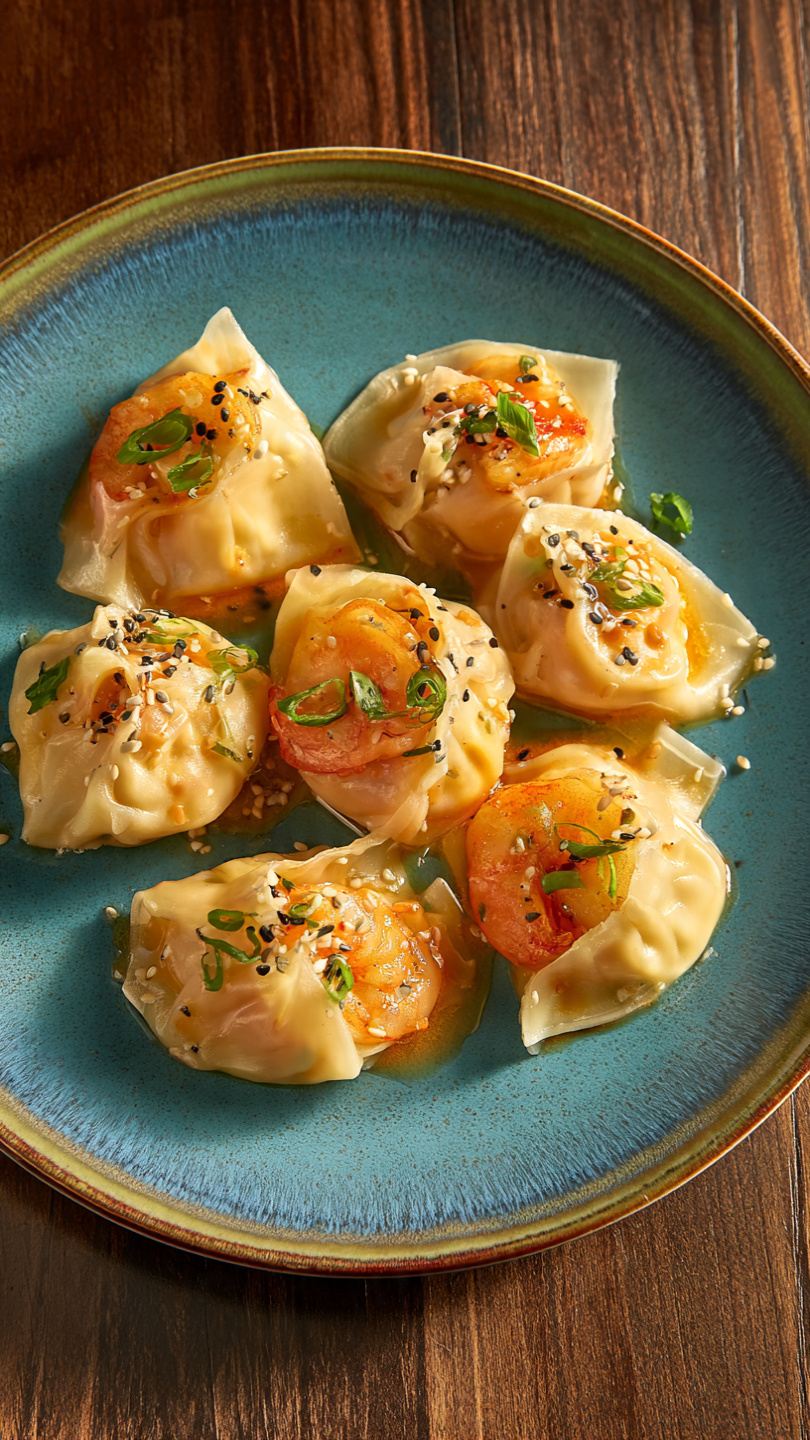
Steamed Shrimp Dumplings (Har Gow)
These restaurant-quality steamed shrimp dumplings feature a delicate, translucent wrapper packed with juicy, seasoned shrimp. A classic dim sum recipe that's surprisingly simple to make at home.

The Dim Sum Classic You Can Finally Make at Home
There is something deeply satisfying about the first bite of a perfectly made steamed shrimp dumpling. The wrapper is thin, silky, and faintly translucent. The filling is juicy, bouncy, and full of sweet shrimp flavor with just a whisper of ginger and sesame. If you have ever loved dim sum, you already know this dish. These are har gow, the undisputed crown jewel of the dim sum cart, and yes, you can absolutely make them in your own kitchen.
This recipe walks you through every step, from mixing the unique wheat starch dough to pleating those iconic folds. It is one of the most rewarding Chinese cooking recipes you will ever tackle, and once you nail it, it will become a permanent part of your Asian cooking repertoire.
Why Har Gow Is Worth Learning
In traditional Cantonese dim sum culture, a chef's skill is often judged by the quality of their har gow. The wrapper must be thin enough to be nearly see-through, yet strong enough not to tear when picked up with chopsticks. The filling should be springy and moist, never watery or dense.
For home cooks, this dumpling recipe punches well above its difficulty level. Yes, there is a small learning curve with the dough and the pleating, but the ingredient list is short, the cooking time is quick, and the result looks and tastes genuinely impressive. It is one of those healthy food dishes that feels indulgent without the guilt, since each serving clocks in at around 210 calories.
Chef's Tip: The secret to springy, restaurant-style shrimp filling is drying your shrimp thoroughly before mixing. Pat them with paper towels until there is no visible moisture. Wet shrimp makes a watery, loose filling that falls apart.
The One Ingredient You Cannot Skip
Before we get into the method, there is one non-negotiable ingredient: wheat starch, also called tang mian flour. This is not the same as all-purpose flour or even rice flour. Wheat starch is what gives har gow its distinctive look and texture, that smooth, slightly chewy, gluten-free wrapper that turns translucent in the steamer. You will find it at any Asian grocery store and online.
The right tools matter too, especially for steaming. A good bamboo steamer allows gentle, even steam circulation and absorbs excess moisture so your wrappers never get waterlogged. These are the tools and ingredients that genuinely make a difference in quick cooking recipes like this one:
Building the Perfect Shrimp Filling
Great dim sum recipes start with great filling technique. For har gow, we use a two-texture method: roughly chop two-thirds of your shrimp for chunky, satisfying bites, and finely mince the remaining third to act as a natural binder. This creates a filling that holds together without needing lots of cornstarch.
The seasoning is deliberately light. We want the shrimp to be the star. A tablespoon of light soy sauce, a teaspoon of sesame oil, fresh ginger, white pepper, and finely sliced green onion are all you need. The bamboo shoots add a subtle crunch that is classic in traditional Chinese cooking.
Once mixed, stir the filling in one direction only for about a minute. This develops a slightly elastic, sticky texture that locks in moisture during steaming. Then refrigerate for 20 minutes while you make the dough.
Mastering the Wheat Starch Dough
The dough comes together fast, but it requires confidence. You combine wheat starch and tapioca starch, then pour boiling water over them all at once, stirring immediately. The hot water gelatinizes the starches on contact, which is what creates that signature smooth, pliable texture.
Knead the dough briefly once it is cool enough to handle. It should feel soft and silky, a little like warm modeling clay. Keep it covered with a damp cloth at all times while you work. This dough dries out quickly, and dry dough cracks and tears when you try to fold it.
When rolling out your wrappers, aim for rounds about 3 inches in diameter. Thinner is better, as long as you can still handle them without tearing. A lightly oiled cleaver is the traditional tool, and it works beautifully.
Chef's Tip: If your first few dumplings look a little rough, do not worry. The pleating is a skill that clicks after a few attempts. Even a simply folded half-moon shape, pressed firmly shut, will taste identical to a perfectly pleated one.
Ready to Steam?
Once your dumplings are shaped, the cooking is the easy part. Eight to nine minutes over a rolling boil is all it takes. You will know they are done when the wrappers have turned translucent and the pink shrimp filling is visible right through the skin. Let them rest for a minute before serving, then bring out the chili oil and soy sauce.
This is one of those low calorie vegetable and seafood dishes that genuinely feels like a treat. Light, fragrant, and deeply satisfying, these are the kind of food videos cooking moments you want to recreate at home.
Here is the complete recipe with all the details:
Steamed Shrimp Dumplings (Har Gow)
These restaurant-quality steamed shrimp dumplings feature a delicate, translucent wrapper packed with juicy, seasoned shrimp. A classic dim sum recipe that's surprisingly simple to make at home.
Ingredients
- 1 cup wheat starch, also called tang mian flour, not all-purpose flour
- 1/4 cup tapioca starch, plus extra for dusting
- 3/4 cup boiling water, just off the boil
- 1 tsp sesame oil, for the dough
- 3/4 lb large raw shrimp, peeled, deveined, and patted very dry
- 3/8 cup bamboo shoots, canned, drained, and finely minced
- 1 tbsp soy sauce, light soy sauce preferred
- 1 tsp sesame oil, for the filling
- 1 tsp cornstarch, helps bind the filling
- 1/2 tsp sugar
- 1/4 tsp white pepper, freshly ground preferred
- 1 tsp fresh ginger, finely grated
- 2 green onion, white and light green parts only, finely sliced
- 2 tbsp chili oil or soy sauce, for serving
Instruction
Make the filling: Roughly chop two-thirds of the shrimp into chunky pieces and finely mince the remaining third. Combining both textures gives the filling great bite. Transfer all the shrimp to a mixing bowl.
Add the bamboo shoots, soy sauce, sesame oil, cornstarch, sugar, white pepper, grated ginger, and green onions to the shrimp. Stir vigorously in one direction for about 1 minute until the mixture becomes slightly sticky and well combined. Cover and refrigerate for 20 minutes.
Make the dough: Combine the wheat starch and tapioca starch in a heatproof bowl and whisk together. Pour the boiling water over the starches all at once and stir immediately with a wooden spoon or chopstick until a shaggy dough forms.
Once cool enough to handle, add the sesame oil and knead the dough for 2 to 3 minutes until smooth and pliable. It should feel soft, like warm Play-Doh. Cover with a damp cloth and rest for 10 minutes.
Shape the dumplings: Divide the dough into 4 equal pieces. Work with one piece at a time, keeping the rest covered. Roll the dough into a log and cut into 8 equal pieces, giving you 32 pieces total.
Lightly dust your work surface with tapioca starch. Use a lightly oiled cleaver or rolling pin to press and roll each piece into a thin round about 3 inches in diameter. The wrappers should be almost translucent.
Place about 1 heaping teaspoon of filling in the center of each wrapper. Do not overfill. Fold the wrapper in half over the filling to form a half-moon shape. Pleat the front edge by making 3 to 5 small folds, pressing each fold firmly against the smooth back edge to seal. Set each finished dumpling on a lightly oiled parchment-lined tray.
Steam the dumplings: Line a bamboo or metal steamer basket with parchment paper or lightly oiled cabbage leaves. Arrange the dumplings in a single layer with about half an inch of space between them.
Bring 2 to 3 inches of water to a rolling boil in a wok or large pot. Place the steamer basket over the boiling water, cover tightly, and steam for 8 to 9 minutes. The wrappers will turn translucent and the filling will look opaque and pink all the way through when done.
Carefully remove the steamer basket from the heat. Let the dumplings rest for 1 minute before serving. Serve immediately with chili oil, light soy sauce, or black vinegar for dipping.
Equipment
- Bamboo or metal steamer basket
- Large wok or wide pot with lid
- Heatproof mixing bowl
- Wooden spoon or chopsticks
- Rolling pin or Chinese cleaver
- Parchment paper
- Sharp knife or bench scraper
Notes
Serving, Storing, and Variations
Serving: Har gow is best eaten immediately out of the steamer. Arrange them on a warm plate with small dishes of light soy sauce, chili oil, or Chinkiang black vinegar for dipping. Pair them with other dim sum recipes like siu mai, turnip cake, or sticky rice in lotus leaf for a full spread.
Variations: Try folding in a small amount of finely diced water chestnuts in place of bamboo shoots for a different crunch. A few drops of oyster sauce in the filling adds depth. For a slightly richer version, add a teaspoon of lard to the dough, which is how many traditional recipes are made.
Storing: Shape and freeze uncooked dumplings in a single layer on a tray, then transfer to a freezer bag for up to one month. Steam directly from frozen with a few extra minutes added. Leftover cooked dumplings reheat best in a steamer rather than a microwave.