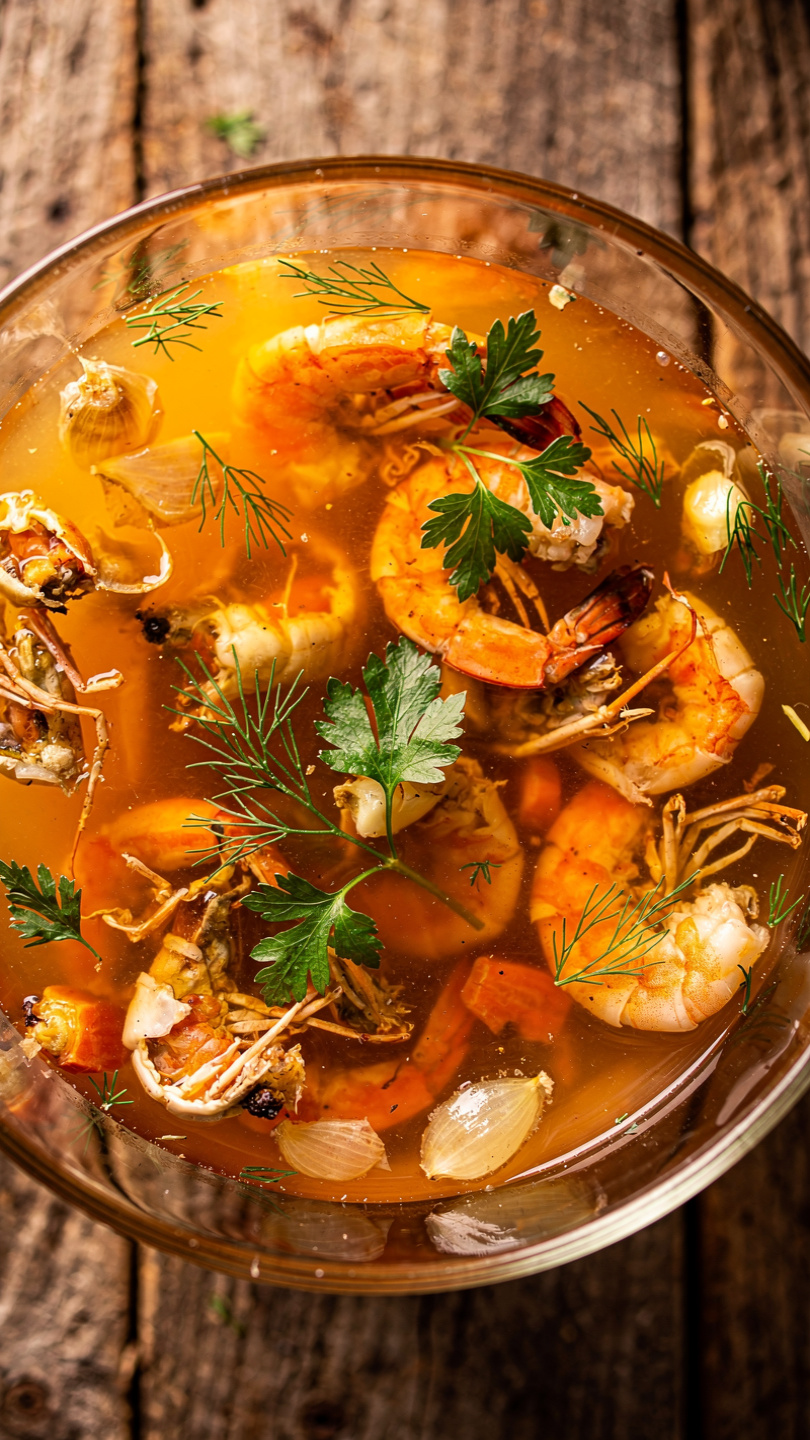
Shrimp Stock from Shells (Rich Homemade Shrimp Broth)
Learn how to make a deeply flavorful shrimp stock from shells in under an hour using simple pantry ingredients. This easy homemade shrimp broth is the secret base for incredible soups, risottos, and seafood dishes.

Stop Throwing Away Your Shrimp Shells
If you have been tossing shrimp shells into the trash after peeling, you have been pouring liquid gold down the drain. Those shells, and especially the heads if you can get them, are packed with an intense oceanic sweetness that forms the backbone of some of the most celebrated dishes in coastal cooking. Learning how to make shrimp stock from shrimp shells is one of those small kitchen skills that quietly transforms everything you cook with seafood.
This is a quick, forgiving, and deeply rewarding recipe. Unlike a long-simmered chicken stock that takes hours on the stove, a homemade shrimp broth comes together in under an hour. You do not need a special technique or a professional kitchen. You need shells, aromatics, water, and about 45 minutes of mostly hands-off time.
The result is a rich amber broth that smells like a seafood restaurant and tastes like the coast. Use it to build a homemade shrimp soup recipe that will genuinely surprise people, stir it into a shrimp risotto, or use it anywhere you would normally reach for store-bought seafood broth.
Why Toasting the Shells Changes Everything
The single most important technique in this shrimp stock recipe easy method is toasting the shells in hot oil before adding any liquid. This step is not optional. When the shells hit a hot pan, the natural sugars and proteins caramelize rapidly, creating dozens of new flavor compounds through a process called the Maillard reaction. The shells turn pink, the kitchen fills with an incredible aroma, and the flavor of your finished stock deepens from mild to magnificent.
Skip this step and you get a pale, thin broth. Do it right and you get a stock with real body, color, and complexity.
Chef's Tip: Do not overcrowd the pan when toasting. If your shells are wet or packed tightly together, they will steam instead of roast. Work in batches if needed, and let them sizzle undisturbed for the first 60 seconds before stirring.
The Tools and Ingredients That Make a Difference
For a recipe this straightforward, quality does matter where it counts. A heavy-bottomed stockpot gives you even heat distribution so the shells toast without scorching. A fine-mesh strainer lined with cheesecloth produces a beautifully clear broth. And using a decent dry white wine, rather than skipping it or using something you would not drink, adds a layer of brightness that balances the richness of the shells.
What Goes Into a Great Shrimp Broth Recipe
Beyond the shells themselves, the supporting cast matters. Here is what you need and why each ingredient earns its place:
- Onion, celery, and carrot: The classic mirepoix. These three vegetables create a savory, rounded foundation that supports without competing with the shrimp flavor.
- Garlic: Adds warmth and depth. Smash the cloves rather than mincing them for gentler flavor.
- Tomato paste: Optional but strongly recommended. Just one tablespoon deepens the color to a gorgeous amber and adds an umami backbone.
- Dry white wine: Deglazes the pan, lifts the browned bits, and introduces acidity that keeps the stock tasting bright and fresh.
- Bay leaves, thyme, and peppercorns: The classic bouquet garni trio. Together they add herbal complexity without overwhelming the shrimp.
- Parsley stems: Often discarded, parsley stems are actually more flavorful than the leaves and perfect for stock.
Chef's Tip: Save your shrimp shells in a zip-lock bag in the freezer as you go. Once you have about 2 cups, you are ready to make a batch. You can use them straight from frozen.
How Long Should You Simmer Shrimp Stock?
This is where shrimp stock differs most from other homemade broths. Do not simmer it longer than 45 minutes. This is one of the most common mistakes in any homemade shrimp broth recipe.
Chicken and beef bones benefit from long, slow cooking because collagen needs time to break down into gelatin. Shrimp shells have no such collagen. What they do have are delicate volatile compounds that release quickly and then, if left on the heat too long, turn bitter and unpleasant. Keep the heat low, skim the foam in the first 10 minutes, and pull it off the burner right on schedule.
The goal is a gently simmering pot, not a boiling one. Bubbles should barely break the surface.
Endless Uses for Shrimp Stock
Once you know how to make shrimp stock, you will find yourself reaching for it constantly:
- Homemade shrimp soup recipe: Use it as the base for a shrimp bisque or a light Thai-inspired coconut shrimp soup.
- Seafood risotto: Stir warm shrimp broth into arborio rice for a risotto that tastes like it came from a proper Italian restaurant.
- Paella and jambalaya: Replace water or chicken broth in either dish for an immediate upgrade.
- Pasta sauces: Reduce a cup of shrimp stock with butter and garlic for a quick pan sauce over linguine.
- Seafood stews and chowders: Any recipe that calls for clam juice or seafood broth will be better with this.
Ready to make a batch? Here is everything you need in one place:
Shrimp Stock from Shells (Rich Homemade Shrimp Broth)
Learn how to make a deeply flavorful shrimp stock from shells in under an hour using simple pantry ingredients. This easy homemade shrimp broth is the secret base for incredible soups, risottos, and seafood dishes.
Ingredients
- 2 cups shrimp shells and heads, from about 1 lb of shrimp, rinsed
- 1 tbsp olive oil, extra virgin
- 1 yellow onion, roughly chopped, skin on is fine
- 2 celery stalks, roughly chopped, leaves included
- 1 medium carrot, roughly chopped, no need to peel
- 3 garlic cloves, smashed
- 1 tbsp tomato paste, optional but adds depth and color
- 1/2 cup dry white wine, such as Sauvignon Blanc or Pinot Grigio
- 6 cups cold water, filtered preferred
- 2 fresh bay leaves, or 1 dried bay leaf
- 4 fresh thyme sprigs, or 0.5 tsp dried thyme
- 1 tsp whole black peppercorns, lightly crushed
- 1/4 cup fresh flat-leaf parsley stems, stems only, leaves reserved for another use
- 1/2 tsp kosher salt, adjust to taste at the end
Instruction
Rinse the shrimp shells thoroughly under cold water. If using heads, give them an extra rinse. Pat them loosely dry with a paper towel.
Heat the olive oil in a large, heavy-bottomed stockpot or Dutch oven over medium-high heat. Add the shrimp shells and heads in a single layer and toast them, stirring occasionally, for 3 to 4 minutes until they turn pink and fragrant. This step is essential for building deep, roasted flavor.
Add the chopped onion, celery, and carrot to the pot. Stir everything together and cook for another 3 minutes until the vegetables begin to soften.
Push everything to one side and add the tomato paste directly to the bottom of the pot. Let it cook undisturbed for about 1 minute until it darkens slightly, then stir it into the shell mixture. Add the smashed garlic and cook for 30 seconds more.
Pour in the white wine and scrape up any browned bits stuck to the bottom of the pot. Let the wine reduce by half, about 2 minutes.
Add the cold water, bay leaves, thyme, peppercorns, and parsley stems. Stir to combine.
Bring the stock to a gentle boil over medium-high heat, then immediately reduce the heat to low. Skim off any foam or impurities that rise to the surface during the first 10 minutes.
Simmer uncovered on low heat for 30 to 35 minutes. Do not let it boil vigorously at any point, as this will make the stock cloudy and can turn the shrimp flavor bitter.
Remove the pot from heat and let the stock rest for 5 minutes. Strain it through a fine-mesh strainer lined with cheesecloth, pressing gently on the solids to extract every last drop of flavor. Discard the solids.
Taste and season with kosher salt. Use immediately or cool completely before storing.
Equipment
- Large stockpot or Dutch oven (at least 6-quart)
- Fine-mesh strainer
- Cheesecloth
- Large heatproof bowl or pitcher
- Wooden spoon or silicone spatula
- Ladle
- Airtight storage containers or freezer bags
Notes
Storing and Freezing Your Homemade Shrimp Broth
Once your stock is strained and cooled, transfer it to airtight containers. It will keep in the refrigerator for up to 3 days and in the freezer for up to 3 months.
For maximum convenience, freeze it in 1-cup and 2-cup portions using mason jars or silicone freezer bags. That way, you can pull out exactly the amount a recipe calls for without defrosting a whole batch. Label everything with the date so nothing gets forgotten at the back of the freezer.
Once you have a rotation of homemade shrimp stock in your freezer, you will be amazed at how much more depth even a simple weeknight dish can have. It is the kind of kitchen habit that separates good home cooks from genuinely great ones.