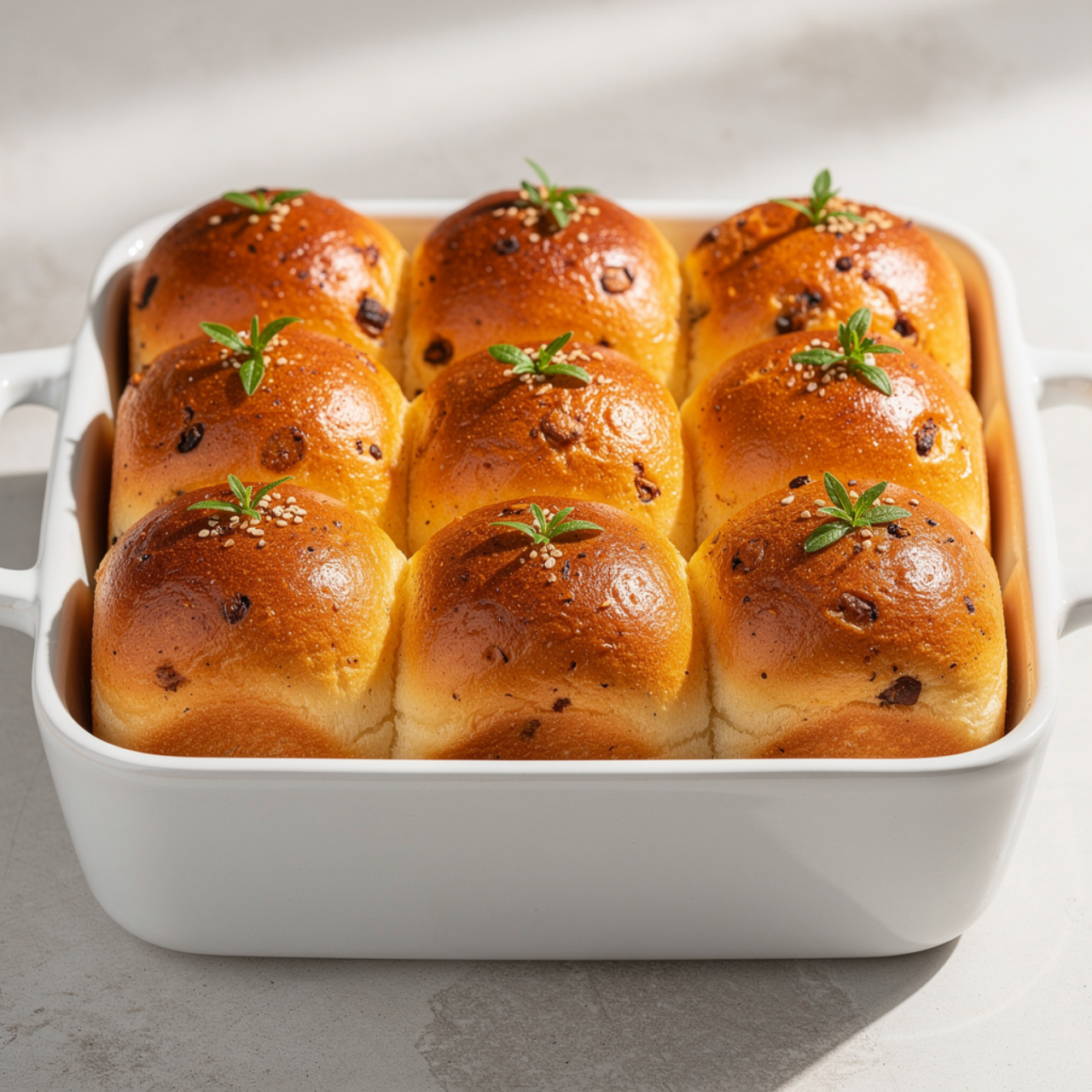
Soft and Buttery Filipino Spanish Bread
This classic Filipino Spanish Bread recipe gives you pillowy soft rolls stuffed with a rich, sweet butter and breadcrumb filling — the ultimate panaderya treat you can make right at home.

The Filipino Bakery Treat You Will Want to Make Every Weekend
If you have ever walked past a Filipino panaderya and been stopped in your tracks by the warm, buttery smell drifting through the door, there is a very good chance Spanish Bread was the culprit. Soft, pillowy rolls stuffed with a sweet butter-and-breadcrumb filling, these little rolls are one of the most iconic items in Filipino baking. Whether you know them as Spanish Bread, Senorita Bread, or simply "that roll from the bakery," this Filipino Spanish Bread recipe brings that bakery magic straight to your kitchen.
This is comfort food in the truest sense. Every bite delivers a tender, slightly chewy crumb wrapped around a filling that is somehow rich and light at the same time. It is sweet but not overpowering. Buttery but not greasy. Simple but completely irresistible.
What Makes Filipino Spanish Bread So Special
Unlike many enriched bread recipes, the Spanish Roll keeps things beautifully simple. The dough uses basic pantry staples: flour, milk, butter, egg, yeast, and sugar. What sets it apart is the butter-breadcrumb filling, which is the real star of the show.
The filling is a mixture of softened butter, powdered sugar, brown sugar, and plain breadcrumbs. When the rolls bake, the filling melts slightly and caramelizes at the edges, creating little pockets of golden, fragrant sweetness inside each roll. No jam. No custard. Just pure, nostalgic butteriness.
Chef's Tip: Use fine, plain dry breadcrumbs for the filling rather than panko or seasoned crumbs. Finer crumbs absorb the butter more evenly and create a cohesive paste that stays put during rolling and baking.
Bread Flour vs. All-Purpose Flour: Does It Matter?
For Spanish Bread Filipino recipes, bread flour is strongly recommended over all-purpose flour. Bread flour has a higher protein content, which develops more gluten during kneading. That extra gluten is what gives these rolls their characteristic chew and helps them hold their shape when stuffed and rolled.
If bread flour is not available, all-purpose flour will still produce a delicious result, just slightly softer and less chewy. Think of it as bakery-style versus homestyle: both are wonderful.
Having the right tools makes a genuine difference in bread baking, from a reliable stand mixer that handles the kneading to parchment paper that prevents sticking and promotes even browning. The equipment you use directly affects the texture and appearance of the finished rolls.
Tips for the Perfect Spanish Bread Filling
The filling in a Spanish Bread Recipe should be thick enough to spread without being runny, so that it does not ooze out during rolling. Here is how to get it right every time:
- Use truly softened butter, not melted. It should yield to a finger press but still hold its shape.
- Sift your powdered sugar to avoid lumps in the filling.
- Do not overfill. About 1 heaping teaspoon per roll is plenty. Overfilling causes the rolls to burst open in the oven.
- Leave a small border around the edges when spreading the filling so it does not escape from the ends when rolled.
These small details are the difference between rolls that look bakery-perfect and rolls that leak filling all over the baking sheet (still delicious, but less photogenic).
A Brief History: Why Is It Called Spanish Bread?
Despite the name, Spanish Bread is not a Spanish recipe in the traditional sense. It is a Filipino creation that emerged during the Spanish colonial period, when European bread-making techniques blended with local tastes and ingredients. The result was a uniquely Filipino style of enriched bread that has been a panaderya staple for generations.
Today, Spanish Bread Filipino recipes are made in home kitchens across the Philippines and in Filipino communities worldwide. Some bakers add a pinch of cinnamon to the filling. Others call it Senorita Bread. The name and tiny variations shift from region to region and family to family, but the soul of the recipe stays the same.
Ready to bake a batch of your own? Here is everything you need:
Soft and Buttery Filipino Spanish Bread
This classic Filipino Spanish Bread recipe gives you pillowy soft rolls stuffed with a rich, sweet butter and breadcrumb filling — the ultimate panaderya treat you can make right at home.
Ingredients
- 3 cups bread flour, plus more for dusting
- 2 1/4 tsp instant dry yeast, one standard packet
- 1/4 cup granulated sugar, divided, 2 tbsp reserved for filling
- 3/4 tsp salt
- 3/4 cup whole milk, warmed to about 110 degrees F
- 1 large egg, room temperature, lightly beaten
- 3 tbsp unsalted butter, softened, for the dough
- 1/2 cup unsalted butter, softened, for the filling
- 1/2 cup powdered sugar, sifted, for the filling
- 1/2 cup fine dry breadcrumbs, plain, not seasoned
- 2 tbsp brown sugar, packed, for the filling
Instruction
In a small bowl, combine the warm milk, 1 tablespoon of granulated sugar, and the instant yeast. Stir gently and let it sit for 5 to 10 minutes until foamy and fragrant.
In the bowl of a stand mixer fitted with a dough hook, whisk together the bread flour, remaining granulated sugar, and salt.
Add the yeast mixture and the beaten egg to the flour mixture. Mix on low speed until a shaggy dough forms, about 2 minutes.
Increase the speed to medium and add the softened butter one tablespoon at a time, waiting until each piece is fully incorporated before adding the next. Knead for 8 to 10 minutes until the dough is smooth, elastic, and slightly tacky but not sticky.
Shape the dough into a ball and place it in a lightly greased bowl. Cover with plastic wrap or a clean kitchen towel and let it rise in a warm spot for 1 hour, or until doubled in size.
While the dough rises, make the filling. Using a fork or hand mixer, beat together the softened butter, powdered sugar, and brown sugar until light and creamy. Fold in the breadcrumbs until the mixture forms a thick, spreadable paste. Set aside.
Once the dough has doubled, punch it down gently and turn it out onto a lightly floured surface. Divide into 16 equal portions, roughly 45g each.
Working one at a time, flatten each dough portion into a rough oval or teardrop shape about 4 inches long using your hand or a rolling pin.
Spread about 1 heaping teaspoon of the butter-breadcrumb filling across the center of each oval, leaving a small border at the edges.
Roll the dough up tightly from the wide end toward the point, like a small crescent or log. Pinch the seam lightly to seal.
Place the rolled breads seam-side down on a parchment-lined baking sheet, spaced about 2 inches apart. Cover loosely and let them proof for 30 to 40 minutes until puffed.
Preheat your oven to 350 degrees F (175 degrees C) during the last 15 minutes of proofing.
Bake for 15 to 18 minutes until the tops are golden brown and the rolls feel light when lifted. Watch closely after the 14-minute mark as they brown quickly.
Remove from the oven and let cool for at least 5 minutes before serving. They are best enjoyed warm.
Equipment
- Stand mixer with dough hook (or large mixing bowl for hand kneading)
- Baking sheet
- Parchment paper
- Rolling pin
- Plastic wrap or clean kitchen towel
- Small mixing bowl
- Fork or hand mixer
Notes
Serving, Storing, and Making It Your Own
Spanish Bread is best served warm from the oven, when the filling is still slightly gooey and the crust has that gentle golden crackle. They pair beautifully with a cup of hot kapeng barako (Filipino coffee) or a cold glass of fresh milk for a truly authentic merienda experience.
For variations on the classic Spanish Bread Filling Recipe, try:
- Ube filling: Swap the breadcrumb mixture for a spoonful of ube halaya for a vibrant purple twist.
- Cheese filling: Add a small strip of quick-melt cheese alongside the butter filling for a sweet-salty combination beloved in Filipino bakeries.
- Cinnamon sugar: Mix a pinch of cinnamon into the filling for a warmer, spiced version.
However you customize it, the Spanish Bread Making Guide above gives you a solid foundation to build on. Once you have mastered the dough and the basic filling, the variations are endless.